


I wrote this guide after reading the Svitla Team’s comprehensive guide published on December 4, 2025. My goal is to help you master essential seo actions 2026 so your website stays competitive as search evolves.
I will walk you through a clear seo strategy that ties content to real search intent. You’ll learn how keyword research pinpoints high-value opportunities and how better content and page design boost user experience and traffic.
We will also cover structured data and schema markup to improve visibility in Google search and other engines. I explain how social media and quality content build authority across platforms and help your pages show up in search results faster.
Read on and I’ll show simple tools, useful data checks, and practical steps you can use right away to improve rankings and serve users better over time.
Key Takeaways
- Align content with search intent to capture relevant users.
- Use keyword research to find traffic and conversion opportunities.
- Apply structured data and schema markup for better Google search visibility.
- Improve user experience on pages to raise engagement and results.
- Integrate social media and quality content to build authority.
Understanding the Modern Search Landscape
Search today rewards clear, useful pages that answer real questions from real people. Modern search engines have moved far beyond simple keyword tricks. They read context, intent, and semantic relationships to surface the best answers.
I watch how google algorithms shift authority toward clarity and intent-match. That means your content must be focused, well-structured, and trustworthy to keep or gain visibility.
Think of search as a conversation between users and platforms. If your pages solve a user’s question, they earn better placement and more traffic over time. If you chase shortcuts, rankings can drop after an update.
- Prioritize users: craft useful content and clean page design.
- Stay current: monitor algorithm updates and adjust information and schema where needed.
- Be proactive: organize pages and media so platforms can find and trust your site.
I’ll help you navigate these changes and build a sustainable path to better search results.
Diagnosing Your SEO Bottlenecks
I first map user paths to find where interest fades and conversions stall. A quick audit shows whether the issue is traffic quality or on-page conversion. This helps me set practical revenue goals before I change content or structure.
Identifying Conversion Gaps
Use google search console to spot pages that get impressions but low clicks or conversions. Look for queries that deliver traffic but not the right users for your funnel.
Tools like Screaming Frog help me find technical problems that block visibility and slow indexation. Fixing redirects, duplicate titles, or thin content often raises results fast.
Setting Revenue Goals
Stop tracking vanity metrics alone. I tie page performance to revenue targets and prioritize fixes that move the needle. That might mean rewriting high-traffic pages for conversion or reallocating budget to pages that already convert.
| Issue | Quick Check | Likely Fix | Expected Result |
|---|---|---|---|
| High impressions, low clicks | Search Console query report | Rewrite title and meta | Higher CTR |
| Traffic but low sales | Behavior & conversion funnels | Improve page copy & CTAs | Better conversions |
| Low indexation | Crawl via Screaming Frog | Fix robots, sitemaps, schema | More pages indexed |
Mastering Essential SEO Actions 2026
I use professional tools to find the exact queries my audience types into search engines.
Long-tail keywords win more often because they match real questions and lower competition. I lean on Ahrefs and Semrush for deep keyword research and competitor insight.
From google search results I track which pages rank and why. That data shows gaps I can fill with stronger content and clearer on-page optimization.
“Consistency and depth beat quick fixes; build pages that answer user questions and platforms reward them.”
- I prioritize long-tail terms with clear intent.
- I use seo tools to map topic clusters and plan content cadence.
- I measure results and reallocate time to pages that drive traffic and conversions.
Focus on quality and keep testing. With steady research, the website gains visibility and trust across engines and platforms.
Leveraging AI for Content Strategy
I use AI to turn raw queries into a clear plan that fits real user intent. AI speeds routine work so I can focus on voice and quality.
Automating Content Outlines
Using tools like chatgpt can cut the time it takes to draft an outline. I ask for headings, intent signals, and suggested keywords, then refine the structure.
This approach helps me produce outlines for landing pages faster while keeping the tone and facts human-reviewed. Human curation preserves unique voice and accuracy.
Analyzing Search Trends
AI-driven trend analysis reveals rising queries and related keywords. I pair that insight with keyword research to build landing pages that match what users ask.
Over 92 percent of marketers now combine traditional measures with AI-supported engines, so I track results and tweak pages to improve traffic and visibility.
- Automate outlines, then edit for clarity and brand voice.
- Use AI to surface semantic keywords, then validate with data.
- Build focused landing pages that answer specific questions and test results over time.
Building Topical Authority Through Clusters
My strategy centers on a pillar page that ties subtopics together so users and engines see a clear topic map.
Clusters let you dominate search results by covering a subject from every angle. A central pillar links to focused pages that answer specific questions and use long-tail keywords to capture niche queries.
This networked approach signals depth to google search and other platforms. It also gives visitors a clear path through related content, which raises time on site and boosts page authority.
- Create a pillar page for the main topic and link clustered subpages back to it.
- Use long-tail keywords on subpages to capture varied user queries.
- Measure which pages drive traffic and refine internal links for better visibility.
“Switching to a topic cluster model leads to higher visibility and better user retention for information portals.” — PASEO Marketing
| Component | Purpose | Expected Result |
|---|---|---|
| Pillar Page | Central hub covering broad information | Improved topical understanding by engines |
| Cluster Pages | Deep answers using long-tail keywords | More qualified traffic and better search results |
| Internal Linking | Connect related pages and guide users | Higher engagement and increased conversions |
Optimizing for Search Intent
Focus on the problem a searcher brings, then craft the content that directly solves it. This approach shapes how I choose format, tone, and depth for every page.
Matching user needs starts by classifying queries into four groups: informational, navigational, transactional, and commercial. I use that split to pick titles, headings, and the right page layout.
When a query is informational, I deliver clear answers and supporting media. For transactional queries, I highlight product details, pricing, and a strong call to action.
- Analyze intent behind each keyword before you write.
- Match format — tutorials for how-tos, comparison pages for buyers.
- Use data from tools and analytics to confirm what users actually seek.
“Provide the exact information users want, and engagement and trust will follow.”
| Intent Type | Page Format | Key Signals |
|---|---|---|
| Informational | How-to, list, explanation | Questions, long-tail keywords, time-on-page |
| Navigational | Brand pages, login, contact | Branded keywords, site links, low bounce |
| Transactional | Product, pricing, checkout | Buy intent keywords, CTAs, conversion funnels |
| Commercial | Reviews, comparisons | Comparison keywords, review schema, high engagement |
Technical Foundations for Better Crawlability
A solid technical base makes it easier for platforms to find and trust your pages.
I monitor site health in google search console daily so I spot indexation problems fast. That helps me find duplicate content, broken links, and pages blocked by robots.txt.
I add structured data and proper schema markup where it matters. These signals give engines clear information about products, articles, and media on the website.
Page speed is a top priority. Slow pages frustrate users and lower traffic. I run audits and fix large images, unused scripts, and render-blocking resources to improve load time.
Well-written meta descriptions raise click rates and explain page purpose to search crawlers and users. I keep them concise and focused on user questions.
I also use tools like Screaming Frog to crawl the site and find technical bottlenecks. Fixing these issues often delivers measurable results in visibility and time on page.
“A tidy site structure and clear markup let engines work for you, not against you.”
- Monitor indexation with search console and fix errors quickly.
- Implement schema markup and structured data for important pages.
- Improve page speed and write strong meta descriptions to boost CTR.
Improving Core Web Vitals and Speed
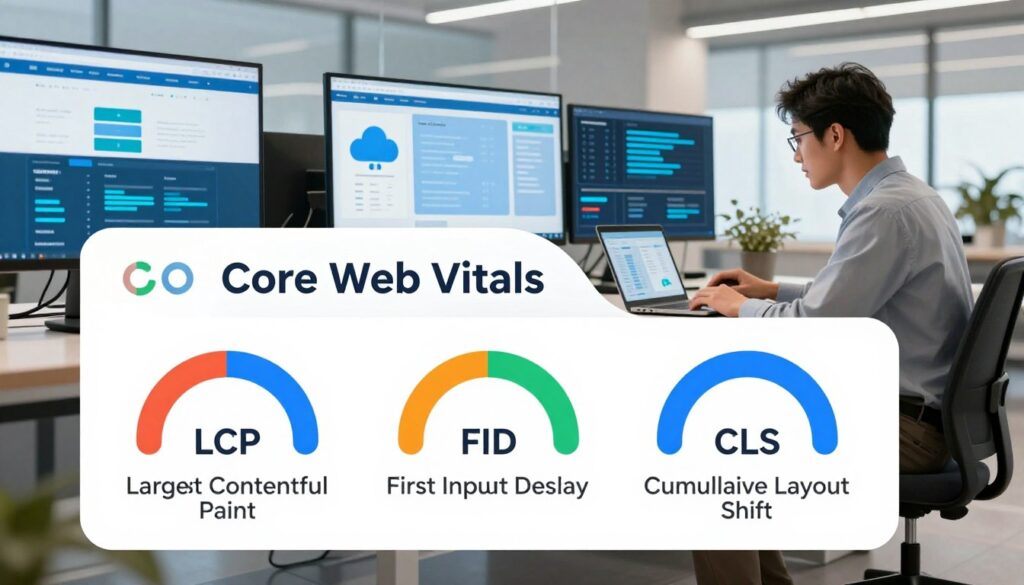
When the main content appears fast and without layout shifts, users stay longer and convert more. A fast, stable site matters to both people and platforms.
Largest Contentful Paint
I watch the Largest Contentful Paint closely because the mobile threshold is 2.5 seconds for a positive experience.
A one-second delay can cut conversion rates by up to 20%, so I prioritize page speed every time I publish new content or media.
Practical steps: compress images, lazy-load offscreen media, and serve critical CSS first. I check performance in google search console and use other tools to measure results.
Visual Stability
Unexpected layout shifts frustrate users and harm engagement. I track Cumulative Layout Shift and remove or reserve space for dynamic elements.
Reducing third-party scripts and fixing font loading often improves stability and lowers load time for pages.
Outcome: faster pages, higher visibility in search, and better traffic quality across engines.
Mobile First Indexing Best Practices
Mobile-first design is no longer optional; Google indexes the mobile view first, so your pages must perform well on phones.
I focus on a seamless user experience across devices because search engines now use the mobile version of your website for indexing. That makes responsive templates a baseline requirement.
Use mobile-friendly image dimensions and serve scaled media to cut load time. Simplify navigation so users can scan content and reach answers with minimal taps.
Test across platforms and screen sizes. Check that tap targets are large enough and that interactive elements respond quickly to touch.
Practical checklist:
- Serve the same content on mobile and desktop to avoid indexing gaps.
- Compress images and lazy-load offscreen media to speed pages.
- Use simple menus and clear headings for easier reading on small screens.
“A mobile-first approach not only helps with rankings but also improves satisfaction for your mobile users.”
| Issue | Check | Fix | Expected Result |
|---|---|---|---|
| Slow mobile load | Page Speed reports | Compress images, remove unused scripts | Faster load, lower bounce |
| Poor navigation | User testing on phones | Simplify menu, use clear CTAs | Higher engagement, more time |
| Tiny tap targets | Manual touch tests | Increase target size, spacing | Fewer interaction errors |
Implementing Structured Data and Schema
Adding schema markup helps platforms understand what your content actually delivers and when to show it as a rich result.
Rich Results Benefits
Structured data and schema markup give search engines clear signals about products, articles, or FAQs on your pages.
That clarity often unlocks rich results like review stars, FAQ snippets, and enhanced product cards. These features stand out in search and can lift click-through rates and traffic.
I use tools like Google’s Structured Data Markup Helper and the Rich Results Test to check code and spot errors. Valid markup makes it easier for platforms to surface your information correctly.
- Mark up articles, products, and FAQ sections to supply explicit data.
- Validate schema markup with testing tools before you publish.
- Focus on accuracy so users get helpful context in search results.
“Sites that apply structured data show higher visibility and more trusted results for users.”
Advanced Keyword Research Techniques
Advanced keyword research digs into forums and real conversations to find the exact words your audience uses.
I look beyond raw volume to uncover search intent and the pain points behind queries. That means tracking questions, phrasing, and the context users give in community threads.
I use tools like Ahrefs to analyze competitor pages and uncover topic gaps I can fill. Combined with social listening, this approach finds long-tail keywords that match real needs.
Since Google deepened its partnership with Reddit in 2024, I now pull authentic user threads to spot trending questions and niche terms. That data often points to content angles missing from larger sites.
- Blend classic keyword research with social signals.
- Prioritize intent over volume when choosing targets.
- Keep research ongoing—users and platforms change constantly.
“Keyword discovery is part data work and part listening. Do both, and your pages win more searches.”
Creating High Quality Original Content

High-quality original content starts with a clear idea and real research that answers readers’ questions.
I focus on three things:
- Fresh research or unique frameworks that offer new insight for users and platforms.
- Original visuals that explain complex points faster than text.
- LSI phrases that add context so search engines understand topic depth.
Using Original Visuals
Diagrams, charts, and screenshots make your content more credible and shareable. I create graphics that reflect my data so readers grasp ideas quickly.
Incorporating LSI Terms
I weave related terms naturally to expand topical coverage. That practice helps pages compete for featured snippets and improves visibility in google search results.
“Original research and clear media set your pages apart from duplicate content and generic summaries.”
Expanding Visibility Through Social Media
I use social media to extend reach and drive more visitors to my pages. Sharing timely content on platforms like TikTok and Instagram helps me tap new audiences quickly.
Short bursts of useful posts often attract attention and create social signals that search engines notice. I pair those posts with links back to key pages on my website.
Optimizing captions with relevant keywords and hashtags makes posts easier to find for users and for search. I also tailor messages for LinkedIn and Twitter to reach professional audiences and drive referral traffic.
| Platform | Primary Benefit | Typical Content |
|---|---|---|
| Visual discoverability, brand recall | Short reels, image posts, stories | |
| TikTok | High organic reach, new audience | Short-form video, trends |
| Professional traffic, thought leadership | Long posts, articles, updates | |
| Real-time engagement, link sharing | Short updates, thread content |
“Companies with strong social presence often gain better placement in search results through increased brand awareness.”
Managing Pagination and Duplicate Content
Pagination that isn’t handled cleanly can split ranking signals and create accidental duplicates across your site.
I keep pagination simple so crawlers focus on the page that best serves users. Clean URL patterns and consistent link rel attributes reduce confusion for search engines and improve indexing time.
Canonical Tag Best Practices
I use canonical tags to point to the main version of a page. That tells google search which URL to prefer and prevents duplicate content from competing in search results.
Keep canonicals consistent across paginated series. If a list needs separate pages, consider rel=”next” / rel=”prev” or a single canonical to the main hub, depending on user intent.
Audit regularly with reliable tools and check data for indexation of unwanted copies. A tidy site structure saves crawl budget, raises visibility, and sends clearer signals to engines and users.
Measuring Success Beyond Traffic
Measure success by the actions users take, not just by how many visit your pages. I track conversion rates, revenue attribution, and path data to see which content truly moves the needle.
I use google search console and the search console reports to watch how specific landing pages perform against goal metrics. That tells me if a page delivers value, not just visits.
Data from platforms like GA4 and other tools shows where users drop off and which keywords lead to conversions. I combine that with lightweight tests to link page speed and media choices to results.
My process: prioritize pages that convert, then refine content and optimization. I use a small set of seo tools to test titles, CTAs, and load time improvements.
“High traffic can mask poor performance; focus on conversion paths and revenue attribution.”
- Track conversions and revenue per page.
- Use search and behavior data to fix funnel leaks.
- Iterate content and page speed tweaks until results improve.
Conclusion
I close with one clear point: focus on tests that match search intent and move pages forward in search results.
, Use practical tools like chatgpt to speed outlines, then apply structured data and schema markup to boost visibility. Tidy meta descriptions and on-page signals help your pages win featured snippets and clicks.
Leverage social media and platforms like LinkedIn to build referrals and brand trust. Roll work out by quarter, prioritize the biggest wins, and measure everything with real data.
Stay curious. I wish you steady growth and clear results as you refine your site and its content.
FAQ
What are the highest-impact actions I should take first to improve site visibility?
How do I diagnose where my traffic is leaking or conversions are low?
Can tools like ChatGPT replace keyword research tools?
What’s the best way to match content to search intent?
How important is structured data and schema markup for rankings?
What technical checks should I run for crawlability?
How do I improve Core Web Vitals like LCP and visual stability?
What mobile-first practices should I follow now?
How can I build topical authority with content clusters?
What are best practices for managing duplicate content and pagination?
How should I measure success beyond raw traffic numbers?
How do I use AI for content strategy without losing originality?
What role do social platforms play in organic visibility?
How often should I refresh content and run keyword research?
Which on-page elements matter most for click-through rate?
How do I handle site migrations or domain changes without losing traffic?
What tools do you recommend for monitoring algorithm updates and search trends?
How can I optimize content for featured snippets and answer boxes?
What’s the best approach to internal linking for topical relevance?
How do I balance content volume with quality when scaling?

Dr. Silas Thorne is a data scientist and SEO architect with over 15 years of experience in algorithmic analysis. Specializing in search intent modeling and technical optimization, he founded freetded.com to bridge the gap between complex big data and actionable marketing strategies. When he isn’t auditing backlink profiles, Dr. Thorne contributes to global digital forensics research.